• About Us
    • The OQACC
    • Research Axes
    • Team
  • Publications
  • Themes
    • Pollen Allergies
    • Heat Islands
    • Floods
    • Lyme disease
    • OQACC’s themes
  • News
  • Contact us
  • Français
  • About Us
    • The OQACC
    • Research Axes
    • Team
  • Publications
  • Themes
    • Pollen Allergies
    • Heat Islands
    • Floods
    • Lyme disease
    • OQACC’s themes
  • News
  • Contact us
  • Français
Linkedin-in Mail-bulk Researchgate

About the OQACC

Climate change in Quebec:
A question of adaptation

Created in December 2013, with support from the health component of the 2013-2020 climate change action plan – known by the French acronym PACC 2020, the Observatory is expanding public awareness of adaptation practices to climate change. The Observatory monitors and evaluates climate change adaptation to produce indices to steer individual and organizational adaptation in Québec. From a public health and health advocacy perspective, it is imperative to better document the efforts expended by both citizens and organizations as they adapt to climate change. The Observatory also provides quality training and tools to Québec professionals operating in the areas of health, engineering, architecture and urban planning.

Now primarily supported by the 2030 Plan for a Green Economy of the provincial department MELCCFP (department of the environment, fight against climate change, wildlife and parks), the Observatory continues to strive to provide a comprehensive portrayal of our adaptation behaviour and measures in relation to various climate hazards (e.g. heat waves, floods, Lyme disease, pollen allergies and air pollution) in population subgroups.

Furthermore, with the goal of instilling transformative change, the findings of the OQACC’s research projects are disseminated to the general public, through bulletins and an online mapping tool, and serve as inputs in the design and assessment of awareness and intervention tools. The Observatory also provides knowledge transfer activities and training for professionals involved in adaptation endeavours such as engineering, architecture, urban planning and land use. Sharing research outcomes is aimed at triggering a positive shift in attitudes and behaviours of individuals and organizations alike. Finally, owing to contributions from Natural Resources Canada (NRCan), Ouranos, the Ministère de la Sécurité publique (MSP) and the Fonds de recherche du Québec we are busy pursuing a number of other initiatives related to climate change adaptation.

Our 3 research axes

Descriptive section

Monitoring individual and organizational climate change adaptation behaviours.

Explanatory section

Studying the determinants of the adoption of climate change adaptation behaviours at the individual and organizational levels.

Knowledge dissemination and transfer component

Knowledge dissemination and transfer in health and climate change

More details

Our Research Team

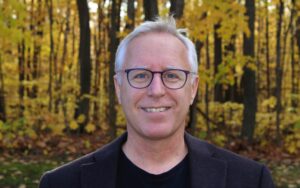
Pierre
Valois

Ph.D,
director

Find out more

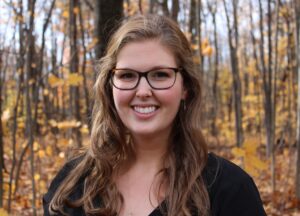
Laurence
Poulin

M.Sc., research professional

Find out more

Sandrine
Tremblay-Houde

M.A., research professional

Find out more

Rodolphe
Tapsoba

Master’s student in measurement and evaluation

Find out more

Véronique
Dumont

M.A., research professional

Find out more

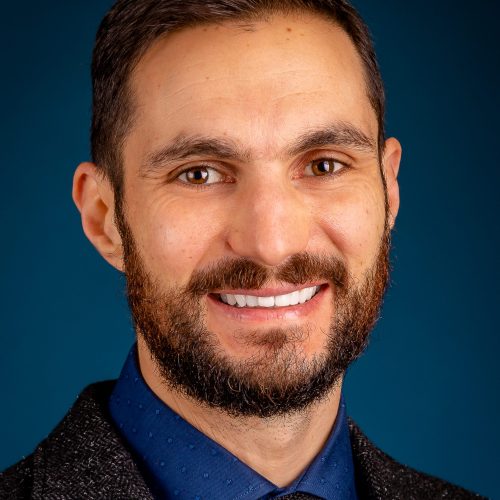
Maxime
Tessier

M.Sc., research professional

Find out more

Lionel Ricardo
Hountondji

Master’s student in measurement and evaluation

Find out more

Myriam
Roy-Lelièvre

Eng., M.A., research professional

Find out more

Johann
Jacob

Ph. D.., research professional

Find out more

Jean-Sébastien Renaud

Ph.D., Co-Investigator

Find out more

Beatriz Osorio

MSc, MEnv, Research Professional

Find out more

Naomie Yoko Helen Herpin

M.Sc., Research Professional

Find out more

Denis Talbot

PhD., Co-Investigator

Find out more

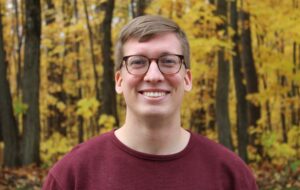
Adrien Cantat

M.A., doctoral candidate

Find out more

Search our publications

All our publications
  • Home
  • About Us
  • Publications
  • Maps
  • News
  • Training
  • Themes
  • Pollen allergies
  • Heat islands
  • Floods
  • Lyme disease
  • Contact
  • 2320 rue des Bibliothèques,
  • local 462, Québec, QC, Canada
  • 418-656-2121, ext. 409330
  • oqacc@fse.ulaval.ca

Observatoire québécois de l’adaptation aux changements climatiques (OQACC)

All rights reserved - 2026 - Web development by Aponia

Our axes in detail

1 - Descriptive section

The general objective of the first axis is to draw an exhaustive portrait of adaptation to climate hazards, such as heat waves, floods, Lyme disease and pollen allergies. At the individual level, higher-risk population subgroups will be targeted. For the organizational component, the studies will concern two categories of public authorities, health institutions that receive patients and municipalities, because of their central role in protecting people against flooding risks and in reducing the phenomenon of urban heat islands.

2 - Explanatory section

The scope of the second research axis is explanatory and predictive. Its objective is to explain the precursors of adaptation, the main purpose being to answer this question: Why do some people and organizations adapt, whereas others adapt little or not at all? These studies will rest on the main psychosocial theories (e.g., theory of planned behaviour, health belief model, protection motivation theory) used to understand and predict health-related behaviours. With a view to building awareness and intervening, it is essential to develop targeted interventions by identifying the precursors that provide a lever to change behaviours. This type of study is beginning to appear in the literature on climate change adaptation, but is still non-existent in Quebec.

3 - Knowledge dissemination and transfer component

Research from the first and second axes will generate considerable knowledge about climate change adaptation in Quebec. The third axis aims at implementing means of disseminating and transferring knowledge to ensure permeability between research and practice. In addition to the publication of reports and scientific communications, recruitment of postgraduate scholarship students is planned, to contribute to the training of the next generation.

Pierre1

Pierre Valois

Ph.D, Director

Pierre is full professor and expert in metrology at the Faculty of Education Sciences of Université Laval. His research projects are varied and concern notably the measurement and evaluation of pro-environmental attitudes and behaviours, climate change adaptation behaviours, health education, change in attitudes and validation of questionnaires. He has served as director of the OQACC since 2014.

Laurence2

Laurence Poulin

M.Sc., research professional

Laurence joined the team of research professionals at the OQACC in 2019. She holds a bachelor’s and master’s degree in consumer science from Université Laval, where she focused on consumer behaviour in ecological contexts. Her work consists mainly in developing the continuing education program for Quebec engineers, urban planners and architects that aims at improving the skills and abilities they need to implement climate change adaptation.

Sandrine2

Sandrine Tremblay-Houde

M.A., research professional

Sandrine joined the team in January 2020. She holds a bachelor’s degree in criminology and recently completed a tailored master’s degree in criminology at Université Laval. She is currently working on the research project aimed at developing a continuing education program for Quebec engineers, urban planners and architects.

Rodolphe1

Rodolphe Tapsoba

Master's student in monitoring and evaluation

Rodolphe is currently a master’s student in measurement and evaluation at the Faculty of Education Sciences of Université Laval in Québec and is supervised by Pierre Valois. He began this training in fall 2019 after arriving from Burkina Faso, his country of origin, where he worked as a general practitioner.

Vero1

Véronique Dumont

M.A., research professional

Research professional for the OQACC since 2020, Véronique holds a bachelor’s degree in international development and modern language and a master’s degree in international studies from the Institut québécois des hautes études internationales (IQHEI) of Université Laval. She worked several years abroad on development and communication projects, notably in Haiti, Brazil and the United States. She is responsible for media communications and relations at the OQACC.

Maxime1

Maxime Tessier

M.Sc., research professional

Maxime holds a bachelor’s and master’s degree in statistics. He has worked at the Statistical Consulting Service on the campus of Université Laval and as a statistician at the Ministère de la Santé et des Services Sociaux. He takes care of database management as well as psychometric and statistical analyses.

Lionel1

Lionel Ricardo Hountondji

Master's student in monitoring and evaluation

Lionel holds a bachelor’s and professional master’s degree from the Faculty of Agronomy at the public Université de Parakou in Benin. In his studies, he specialized in economics and rural sociology. To date, his career has included work as a research assistant and participation in the publication of several scientific articles.

Myriam1

Myriam Roy-Lelièvre

Eng, M.A., research professional

Myriam joined the team in 2020. She holds a bachelor’s degree in chemical engineering from Université de Sherbrooke and a tailored master’s degree in college education from Université Laval. She worked a few years in consulting engineering and now teaches chemical engineering in CEGEP. At the OQACC, she is participating in the development of continuing education in climate change adaptation for Québec engineers, architects and urban planners.

Johann1

Johann Jacob

M.A.P., research professional

Johann holds a Ph.D. in measurement and evaluation at Université Laval within the OQACC. His doctoral research pertained to the development of indices for measuring the progress of Quebec municipalities in terms of adaptation, as well as to the identification of the main factors that predict municipal staff’s adoption of adaptation measures. Johann also has more than 10 years’ experience in program evaluation. He joined the OQACC in 2016 and works mainly on studies concerning organizational adaptation to climate change.

20190919-Jean-Sebastien_Renaud_(_DSC7322)_web

Jean-Sébastien

Ph.D. Co-Investigator

Jean-Sébastien Renaud is an assistant professor at the department of family medicine and emergency medicine, part ofthe faculty of medicine at Université Laval, and researcher for VITAM- Centre for Sustainable Health Research. He is also the director of the evaluation sector at the vice-deanship for pedagogy and continuing professional development at the faculty of medicine of the sameuniversity. He holds a doctorate and a master's degree in measurement andevaluation, as well as a bachelor's degree in consumer sciences and a certificate in administration, all from the same institution. His research focusses on pedagogical evaluation in health sciences.

Photo_bea

Beatriz Osorio

MSc, MEnv, Research Professional

Beatriz has been part of the OQACC’s team of research professionals since 2018. She holds a bachelor’s degree in biology from Universidad Nacional Agraria La Molina (UNALM), a master’s degree in environmental assessment from McGill University, as well as a master’s degree in environmental sciences from Université de Sherbrooke. She has over 10 years’ experience in various projects concerning climate change adaptation and environmental assessment. At the OQACC, she works mainly on measurement and assessment of the impact of climate change adaptation.

grad_photo

Naomie Yoko Helen Herpin

MSc, Research Professional

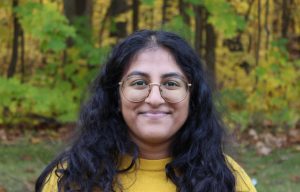
Naomie joined the OQACC in 2022. She has a Bachelor of Science in natural resources conservation from the University of British Columbia, as well as a Master of Science in forest sciences from Laval University. At the OQACC, she primarily works on the cartography of climate change opinions in Quebec. Naomie is principally interested in the communication of climate change research to the general public.

PXL_20210325_192229009.PORTRAIT

Denis Talbot

PhD, Co-Investigator

Denis Talbot is an associate professor in biostatistics at the Faculty of Medicine of Université Laval. His research program concerns the development of causal inference statistical methods. He also collaborates as a biostatistical expert in various research projects, including those of the OQACC.

20201216-Adrien_Cantat_(_DSC3907)-2

Adrien Cantat

PhD., Co-Investigator

Since 2022, Adrien has been a Ph.D. candidate in measurement and evaluation under the direction of Pierre Valois, Director of the OQACC. Through his research project, he hopes to develop a competency framework on climate change adaptation from a public health perspective and to develop training modules based on this framework. He completed a master of education in administration and evaluation from Université Laval and holds a master’s degree in humanities from Université Paul-Valéry Montpellier 3. Adrien is also a pedagogical counsellor for the faculty of medicine of Université Laval where he has been contributing to various study programs since 2014.

Our axes in detail

1 - Descriptive section

The general objective of the first axis is to draw an exhaustive portrait of adaptation to climate hazards, such as heat waves, floods, Lyme disease and pollen allergies. At the individual level, higher-risk population subgroups will be targeted. For the organizational component, the studies will concern two categories of public authorities, health institutions that receive patients and municipalities, because of their central role in protecting people against flooding risks and in reducing the phenomenon of urban heat islands.

2 - Explanatory section

The scope of the second research axis is explanatory and predictive. Its objective is to explain the precursors of adaptation, the main purpose being to answer this question: Why do some people and organizations adapt, whereas others adapt little or not at all? These studies will rest on the main psychosocial theories (e.g., theory of planned behaviour, health belief model, protection motivation theory) used to understand and predict health-related behaviours. With a view to building awareness and intervening, it is essential to develop targeted interventions by identifying the precursors that provide a lever to change behaviours. This type of study is beginning to appear in the literature on climate change adaptation, but is still non-existent in Quebec.

3 - Knowledge dissemination and transfer component

Research from the first and second axes will generate considerable knowledge about climate change adaptation in Quebec. The third axis aims at implementing means of disseminating and transferring knowledge to ensure permeability between research and practice. In addition to the publication of reports and scientific communications, recruitment of postgraduate scholarship students is planned, to contribute to the training of the next generation.

Pierre1

Pierre Valois

Ph.D, Director

Pierre is full professor and expert in metrology at the Faculty of Education Sciences of Université Laval. His research projects are varied and concern notably the measurement and evaluation of pro-environmental attitudes and behaviours, climate change adaptation behaviours, health education, change in attitudes and validation of questionnaires. He has served as director of the OQACC since 2014.

Laurence2

Laurence Poulin

M.Sc., research professional

Laurence joined the team of research professionals at the OQACC in 2019. She holds a bachelor’s and master’s degree in consumer science from Université Laval, where she focused on consumer behaviour in ecological contexts. Her work consists mainly in developing the continuing education program for Quebec engineers, urban planners and architects that aims at improving the skills and abilities they need to implement climate change adaptation.

Sandrine2

Sandrine Tremblay-Houde

M.A., research professional

Sandrine joined the team in January 2020. She holds a bachelor’s degree in criminology and recently completed a tailored master’s degree in criminology at Université Laval. She is currently working on the research project aimed at developing a continuing education program for Quebec engineers, urban planners and architects.

Rodolphe1

Rodolphe Tapsoba

Master's student in monitoring and evaluation

Rodolphe is currently a master’s student in measurement and evaluation at the Faculty of Education Sciences of Université Laval in Québec and is supervised by Pierre Valois. He began this training in fall 2019 after arriving from Burkina Faso, his country of origin, where he worked as a general practitioner.

Vero1

Véronique Dumont

M.A., research professional

Research professional for the OQACC since 2020, Véronique holds a bachelor’s degree in international development and modern language and a master’s degree in international studies from the Institut québécois des hautes études internationales (IQHEI) of Université Laval. She worked several years abroad on development and communication projects, notably in Haiti, Brazil and the United States. She is responsible for media communications and relations at the OQACC.

Maxime1

Maxime Tessier

M.Sc., research professional

Maxime holds a bachelor’s and master’s degree in statistics. He has worked at the Statistical Consulting Service on the campus of Université Laval and as a statistician at the Ministère de la Santé et des Services Sociaux. He takes care of database management as well as psychometric and statistical analyses.

Lionel1

Lionel Ricardo Hountondji

Master's student in monitoring and evaluation

Lionel holds a bachelor’s and professional master’s degree from the Faculty of Agronomy at the public Université de Parakou in Benin. In his studies, he specialized in economics and rural sociology. To date, his career has included work as a research assistant and participation in the publication of several scientific articles.

Myriam1

Myriam Roy-Lelièvre

Eng, M.A., research professional

Myriam joined the team in 2020. She holds a bachelor’s degree in chemical engineering from Université de Sherbrooke and a tailored master’s degree in college education from Université Laval. She worked a few years in consulting engineering and now teaches chemical engineering in CEGEP. At the OQACC, she is participating in the development of continuing education in climate change adaptation for Québec engineers, architects and urban planners.

Johann1

Johann Jacob

M.A.P., research professional

Johann holds a Ph.D. in measurement and evaluation at Université Laval within the OQACC. His doctoral research pertained to the development of indices for measuring the progress of Quebec municipalities in terms of adaptation, as well as to the identification of the main factors that predict municipal staff’s adoption of adaptation measures. Johann also has more than 10 years’ experience in program evaluation. He joined the OQACC in 2016 and works mainly on studies concerning organizational adaptation to climate change.

20190919-Jean-Sebastien_Renaud_(_DSC7322)_web

Jean-Sébastien

Ph.D. Co-Investigator

Jean-Sébastien Renaud is an assistant professor at the department of family medicine and emergency medicine, part ofthe faculty of medicine at Université Laval, and researcher for VITAM- Centre for Sustainable Health Research. He is also the director of the evaluation sector at the vice-deanship for pedagogy and continuing professional development at the faculty of medicine of the sameuniversity. He holds a doctorate and a master's degree in measurement andevaluation, as well as a bachelor's degree in consumer sciences and a certificate in administration, all from the same institution. His research focusses on pedagogical evaluation in health sciences.

Photo_bea

Beatriz Osorio

MSc, MEnv, Research Professional

Beatriz has been part of the OQACC’s team of research professionals since 2018. She holds a bachelor’s degree in biology from Universidad Nacional Agraria La Molina (UNALM), a master’s degree in environmental assessment from McGill University, as well as a master’s degree in environmental sciences from Université de Sherbrooke. She has over 10 years’ experience in various projects concerning climate change adaptation and environmental assessment. At the OQACC, she works mainly on measurement and assessment of the impact of climate change adaptation.

grad_photo

Naomie Yoko Helen Herpin

MSc, Research Professional

Naomie joined the OQACC in 2022. She has a Bachelor of Science in natural resources conservation from the University of British Columbia, as well as a Master of Science in forest sciences from Laval University. At the OQACC, she primarily works on the cartography of climate change opinions in Quebec. Naomie is principally interested in the communication of climate change research to the general public.

PXL_20210325_192229009.PORTRAIT

Denis Talbot

PhD, Co-Investigator

Denis Talbot is an associate professor in biostatistics at the Faculty of Medicine of Université Laval. His research program concerns the development of causal inference statistical methods. He also collaborates as a biostatistical expert in various research projects, including those of the OQACC.

20201216-Adrien_Cantat_(_DSC3907)-2

Adrien Cantat

PhD., Co-Investigator

Since 2022, Adrien has been a Ph.D. candidate in measurement and evaluation under the direction of Pierre Valois, Director of the OQACC. Through his research project, he hopes to develop a competency framework on climate change adaptation from a public health perspective and to develop training modules based on this framework. He completed a master of education in administration and evaluation from Université Laval and holds a master’s degree in humanities from Université Paul-Valéry Montpellier 3. Adrien is also a pedagogical counsellor for the faculty of medicine of Université Laval where he has been contributing to various study programs since 2014.